
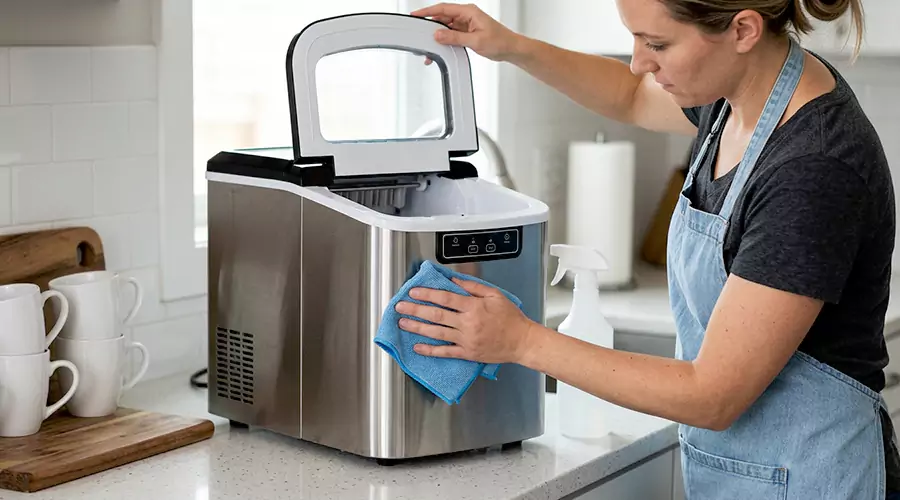
Knowing how to clean a countertop ice machine helps keep ice fresh and safe for daily use. A countertop ice machine uses water every time it runs. Minerals and slime can build up inside the reservoir. Mold and odors can also form when moisture stays inside the unit.
Regular cleaning protects the water reservoir and ice basket. It also helps keep the water lines and interior parts cleaner. A clean machine makes better tasting ice. It also helps the appliance produce ice more consistently.
Why Countertop Ice Machine Cleaning Matters?
Countertop ice machine cleaning matters because the appliance turns stored water into ice. Dirty water areas can affect every batch. The reservoir can collect minerals and residue over time. Bacteria can also grow when the machine stays damp between uses. This buildup can cause cloudy ice or bad smells. Cleaning helps prevent clogs and weak ice production.
Signs Your Ice Maker Needs Cleaning
You should clean countertop ice maker parts when ice starts to look, smell, or taste different. A dirty unit often shows small warning signs before it stops working well.
Common signs include:
- Ice smells strange.
- Ice tastes stale.
- The water reservoir looks cloudy.
- White scale appears inside the machine.
- Slime forms around the water area.
- Ice pieces look smaller than usual.
- The machine runs slower than normal.
If you notice these signs, cleaning should not be delayed.
Quick Cleaning Guide
| Area to Clean | What to Use | How Often |
|---|---|---|
| Water reservoir | Vinegar solution or approved cleaner | Weekly to monthly |
| Ice basket | Warm water and mild soap | Weekly |
| Interior walls | Soft cloth | Weekly |
| Water lines | Cleaning cycle solution | Monthly |
| Exterior | Damp cloth | As needed |
| Drain plug area | Soft brush | Monthly |
How to Clean Portable Ice Maker Safely?
Learning how to clean portable ice maker units starts with unplugging the appliance. Remove all ice from the basket before cleaning. Drain old water from the reservoir if your model has a drain plug.
Never clean the machine while it is running.
Basic safety steps include:
- Unplug the ice maker first.
- Remove ice and standing water.
- Avoid harsh chemicals.
- Do not soak electrical parts.
- Use soft cloths only.
- Let parts dry before use.
These steps help protect the appliance from damage.
Portable Ice Maker Cleaning Steps
Portable ice maker cleaning is simple when you follow a clear process. Start by:
- Removing the ice basket and washing it with warm water and mild dish soap.
- Wiping the inside of the machine with a soft cloth.
- Using a cleaning solution to run a cleaning cycle if your model supports one.
- Draining the solution completely after cleaning.
- Running one or two fresh water cycles before making ice for use.
Ice Machine Cleaning Tips
Good ice machine cleaning tips can help your appliance stay fresh longer. Use clean water each time you fill the reservoir. Do not leave old water sitting in the unit for days.
Wipe moisture from the inside after heavy use.
Helpful habits include:
- Empty unused ice often.
- Drain old water after use.
- Wipe the reservoir weekly.
- Keep the lid open briefly to dry.
- Use filtered water when possible.
- Clean the machine before storing it.
Small habits can prevent bigger cleaning problems later.
Countertop Ice Maker Maintenance
Regular countertop ice maker maintenance helps reduce scale, odor, and slime buildup.
Check the water reservoir often and remove visible residue. Inspect the ice basket for film or cloudy buildup. Keep the air vents clear so the machine can release heat properly.
Maintenance tasks include:
- Rinse the basket often.
- Clean the reservoir on schedule.
- Check the drain plug.
- Wipe the lid and controls.
- Keep the machine level.
- Store it dry when not in use.
Good maintenance supports better ice production.
Clean Ice Maker With Vinegar
You can clean ice maker with vinegar when your owner manual allows it. Mix equal parts white vinegar and water in the reservoir. Run a cleaning cycle or ice making cycle without saving the ice. Drain the vinegar mixture after the cycle finishes. Run clean water through the machine to remove vinegar smell. Do not mix vinegar with bleach or other chemicals.
Clean Ice Maker With Baking Soda
You can clean ice maker with baking soda for light odor and surface cleaning. Mix baking soda with warm water until it dissolves. Use a soft cloth to wipe the inside surfaces. Rinse the machine well with clean water after wiping. Baking soda can help with mild smells, but heavy scale may need a stronger cleaner.
Ice Machine Descaling
Ice machine descaling removes mineral buildup from hard water. Scale often looks like white chalky residue inside the water reservoir. Minerals can block small openings and reduce ice production. Use a descaling product approved for ice machines if buildup is heavy.
Remove Mold From Ice Maker
To remove mold from ice maker areas, unplug the unit and drain all water first. Wear gloves and wipe visible mold with a cleaner approved for food contact surfaces. Pay attention to corners, seams, the lid, and the water reservoir.
Rinse thoroughly after cleaning. If mold keeps returning, the machine may need deeper service or replacement.
When the Ice Maker Smells Bad?
An ice maker smells bad when old water, residue, mold, or bacteria collect inside. Bad odor can also come from storing the machine with moisture inside.
Drain the reservoir and clean the machine completely. Run fresh water cycles before using the ice again. Throw away the first batch of ice after cleaning.
Dirty Water Reservoir Problems
An ice maker dirty water reservoir can make fresh water taste stale. The reservoir should look clear and free from cloudy film.
Stop using the machine if you see slime or floating particles. Empty the reservoir before cleaning the interior. Refill the unit with fresh water after cleaning. This simple habit helps reduce odor and buildup.
How Often to Clean Ice Maker?
Many homeowners ask how often to clean ice maker units when they use the machine every day. Wipe the basket and reservoir once a week.
Deep clean the machine once a month during regular use. Clean it sooner when you notice odor or cloudy ice. Hard water leaves mineral scale faster.
Daily use also means the machine needs more frequent care.
Countertop Ice Machine Care
Proper countertop ice machine care includes cleaning, drying, and storing the unit correctly. Do not leave water inside the reservoir when the appliance is not in use. Keep the machine away from heat sources and direct sunlight.
Make sure air vents are not blocked during operation. Better care helps the machine produce ice faster and stay cleaner.
Choosing an Ice Maker Cleaning Solution
An ice maker cleaning solution should be safe for your specific machine. Check the owner manual before using any cleaner. Some machines allow vinegar, while others recommend a special descaler.
Avoid bleach unless the manufacturer clearly approves it. Strong chemicals can leave residue and damage internal parts.
Clean Ice Maker Water Lines
To clean ice maker water lines, run a cleaning solution through the machine if your model has a cleaning cycle. Water lines can hold mineral scale, slime, and residue. After the cleaning cycle, run fresh water through the system.
Discard the first few batches of ice after cleaning. This helps remove leftover cleaner from the water path.
Prevent Slime in Ice Machine
To prevent slime in ice machine parts, control moisture and clean the reservoir often. Slime grows faster when water sits too long. Drain unused water and let the inside dry before storage. Use fresh water each time you make ice. Keep the lid and basket clean to reduce buildup.
Appliance Cleaning Tips
Simple appliance cleaning tips can keep your countertop ice machine working better. Clean small messes before they turn into heavy buildup. Use soft cloths instead of rough scrubbers.
Follow the manual for cleaning cycles and approved products. Stay consistent with weekly and monthly cleaning.
Final Thoughts
Cleaning a countertop ice machine improves ice taste and reduces odors. Start with the basket and reservoir. Clean the interior surfaces and water areas next. Use vinegar or baking soda only when the appliance manual allows it.
An approved ice maker cleaner works well for scale and buildup. Regular care keeps your countertop ice maker fresh and ready for daily use.